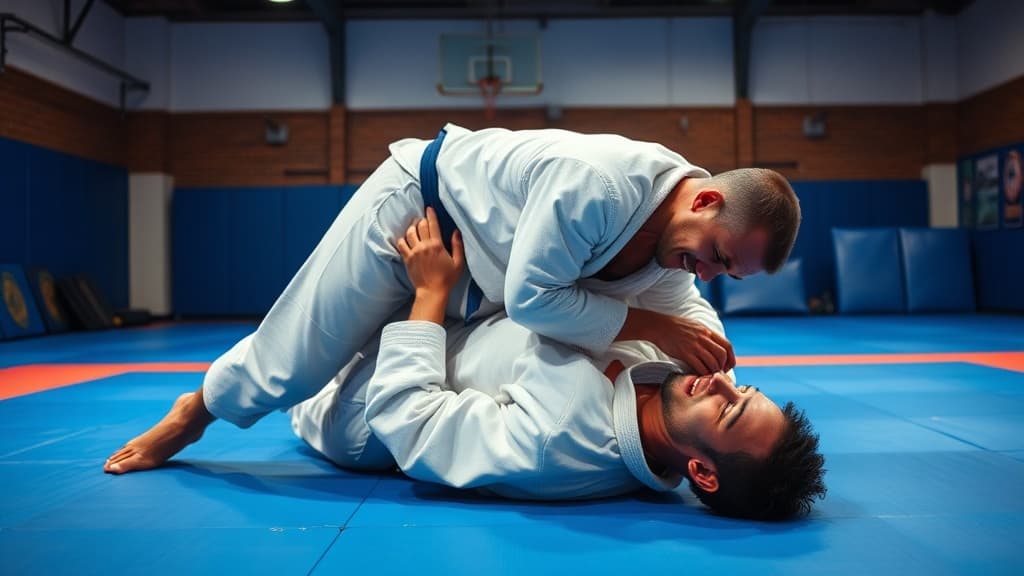
I started training Brazilian Jiu-Jitsu at 38. I walked onto the mat knowing essentially nothing, got submitted by a 140-pound teenager in the first five minutes, and went home completely humbled.
I went back the next week. And the week after that.
Two months in, I've learned more about how people learn — and how I specifically need to think about coaching — than I expected. Here are the three lessons that stuck.
1. Beginner's Mind Is Earned, Not Assumed
I have been coaching for over a decade. I am comfortable being the person who knows things. Walking into that gym and knowing nothing was genuinely uncomfortable in a way I had almost forgotten.
What surprised me was how much my ego got in the way early on. I kept trying to muscle through positions instead of learning the technique. I kept wanting to apply logic from other physical things I know instead of just listening to what I was being taught. I wasted the first few sessions fighting my own resistance to being a beginner.
The moment I let that go — when I stopped trying to figure it out and just started following instructions — I learned faster in two days than I had in three weeks.
I think about my clients now and the early sessions where they're still trying to fit what I'm saying into what they already believe. I have more patience for that phase than I did before.
2. The Rep Is the Point
BJJ is not a sport where you can think your way to competence. You have to drill. You have to roll. You have to get caught in the same bad position fifty times before your body starts making the right adjustment automatically.
There's no shortcut. There's no hack. There's just volume and time.
I know this about fitness. I tell clients this about fitness. Experiencing it from the other side — as the person who is frustrated by the gap between what I know intellectually and what my body actually does — reminded me why the consistency message is so important. It's not about motivation. It's about putting the repetitions in long enough for the skill to form.
3. Getting Tapped Is Information, Not Failure
In BJJ, "tapping" means you got caught. You were put in a position where continuing would mean injury, so you tap the mat and your training partner releases the hold. It happens constantly when you're new.
The first few times it happened I felt embarrassed. By week three I started treating each tap as a data point. Why did I end up there? What was the thing I missed five moves ago that put me in that position? What would I do differently?
That's the right relationship to have with a setback in any skill. Not shame. Curiosity.
I got submitted by that same 140-pound teenager three weeks later. But this time I knew exactly what I did wrong to get there. Progress isn't always visible from the outside.
Why I'm Telling You This
I coach people who are learning something hard — changing the way they eat, starting to exercise for the first time in years, rebuilding a relationship with their body after a long time of treating it poorly. The learning curve is uncomfortable. The early frustration is real.
Going back to being a beginner reminded me that the discomfort isn't a sign something is wrong. It's a sign something is working. You are not supposed to be good at new things yet. That's the whole point of starting.
Ready to put this into practice?
Stop reading about it. Start doing it.
Take the 2-minute quiz to find out which Gray Method program fits where you are right now, or send Adam a quick note.