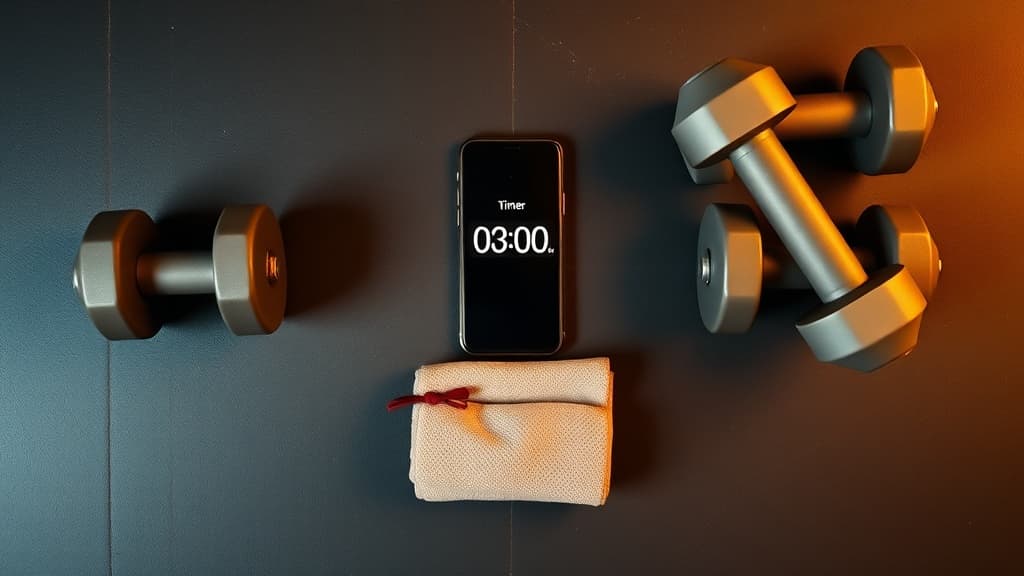
I've heard every variation of "I don't have time to work out." The most common is: "I only have 20 minutes, so it's not worth it."
It is worth it. Significantly worth it. The 20-minute workout done consistently over a year is worth more than the 60-minute session you did three times and then abandoned because the schedule wasn't sustainable.
What 20 Minutes Actually Does
Twenty minutes of resistance training is enough to create a meaningful muscle-building stimulus if the intensity is appropriate. Research on time-efficient training shows that shorter, higher-effort sessions produce similar hypertrophy outcomes to longer, lower-intensity sessions — as long as proximity to failure is reached.
Translation: if you're working hard enough in 20 minutes, your muscles don't know the difference between that and an hour-long session where you spent 30 minutes resting and scrolling your phone between sets.
How to Build a 20-Minute Session
The key is eliminating everything that doesn't produce adaptation. That means compound movements only, minimal rest, and no warm-up ceremony.
A simple template:
- 2 minutes: quick movement prep (leg swings, arm circles, light squat)
- 18 minutes: 3 to 4 compound exercises, 3 sets each, 30–45 second rest
- Example: goblet squat, dumbbell row, push-up, hip hinge
If you have dumbbells and 20 minutes, that is a complete training session. It hits legs, back, chest, and posterior chain. It elevates your heart rate. It creates the mechanical tension needed for muscle adaptation.
The Intensity Requirement
Short workouts only work if you're not coasting. The rest periods are short. The weights should be challenging — meaning the last 2 or 3 reps of each set are genuinely hard. If you could do 5 more reps easily, the weight is too light.
Most people underload. They pick a weight that feels safe and they never increase it. This is why long workouts at low intensity don't produce results either. The length isn't the variable. The challenge is.
The Real Value of the 20-Minute Session
The 20-minute workout keeps the habit alive on the hard weeks. When you're traveling, when work is overwhelming, when the kids are sick — you can almost always find 20 minutes. And that 20-minute session keeps your momentum intact, keeps the habit in place, keeps your body from losing what you've built.
The enemy of long-term progress isn't a short workout. It's the extended break that happens when you decide short workouts don't count.
Twenty minutes counts. Do the 20 minutes.
Ready to put this into practice?
Stop reading about it. Start doing it.
Take the 2-minute quiz to find out which Gray Method program fits where you are right now, or send Adam a quick note.